
Imagine digging up your garden, tearing out a cracked tank, and paying for the whole job twice. Nobody plans for that. Yet it happens every day, because most buyers compare price tags and forget to compare lifespans.
So let’s fix that. Here’s how long a biodigester can last, what quietly shortens its life, and how to choose a tank that outlives your mortgage.
The Short Answer
Under proper care and maintenance, a biodigester’s useful life runs 20 to 25 years. That figure is a solid benchmark. But material changes everything. FRP (fibre-reinforced plastic) bio septic tanks resist ageing, acids, and alkalis, and they can last more than 50 years.
| Tank Material | Typical Life | What Usually Fails First |
|---|---|---|
| Brick and mortar | 15–20 years | Cracks and seepage |
| RCC (concrete) | 20–25 years | Acid corrosion, hairline leaks |
| Plastic (HDP/PVC) | 15–25 years | UV damage, wall deformation |
| FRP | 50+ years | Little, if fitted correctly |
Treat these as rough ranges. Soil, workmanship, and daily habits can push any tank above or below them.
How a Biodigester Actually Works
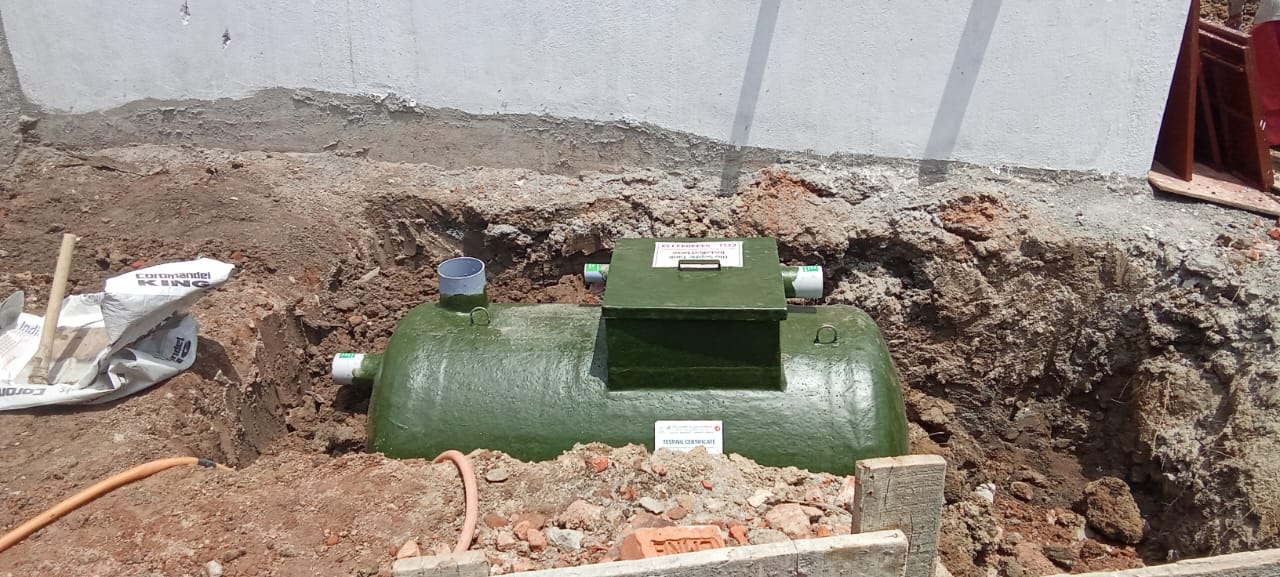
A biodigester is a sealed, oxygen-free chamber where bacteria feed on waste. Anaerobic digestion turns solids into water and gas, so you need no electricity and no moving parts. The principle matches DRDO’s biodigester technology, built to work in harsh conditions.
Here’s the key insight. Bacteria renew themselves, but the tank wall doesn’t. Over the decades, the container decides how long the system survives.
Why Material Is the Biggest Factor
Wastewater isn’t gentle. As waste breaks down, it releases acidic gases such as hydrogen sulphide. Those gases creep up the walls and slowly eat concrete and steel, much like salty air eats a bicycle chain. A corroded wall leaks, and a leaking tank pollutes your borewell and your garden.
FRP doesn’t play by those rules. Glass fibre locked in resin stays stable against acids and alkalis, and a one-piece moulded body leaves no joints to fail. That’s why the same material goes into boat hulls and chemical tanks.
FRP Advantages at a Glance
- Corrosion-proof: Wastewater chemistry can’t break it down
- Leak-proof: Seamless moulding means no weak joints
- Age-resistant: It won’t rot, rust, or flake
- Lightweight: Faster, safer installation
- Low upkeep: No re-plastering, repainting, or patching
Five Things That Shorten (or Stretch) a Biodigester’s Life
1. Design and Fabrication
Thin walls and weak joints age early. India’s IS 18150:2023 code of practice covers the design, fabrication, and installation of biodigesters. Ask every supplier how their tank meets it.
2. Installation Quality
A tank resting on uneven ground slowly cracks under its own load. Proper bedding, careful backfilling, and groundwater protection matter, especially in Tamil Nadu, where coastal soil and a high water table add stress.
3. What You Flush and Pour
Bleach, phenyl, and acid-based cleaners kill the bacteria. Wipes, sanitary products, and plastic don’t dissolve, so they clog the system. Your tank can only handle what it’s fed.
4. Water Load
Leaking taps and running toilets flush bacteria out before they finish their work. A tank that’s too small for your household suffers the same fate.
5. Maintenance Habits
Small checks catch small problems. Skip them, and those problems grow quietly underground.
Warning Signs Your Biodigester Is Ageing
Catch trouble early, and repairs stay small. Watch for:
- Foul smells around the tank or bathrooms
- Slow drains or repeated back-ups
- Damp, soggy ground above the tank
- A cracked, sunken, or tilted cover
- Dark, untreated-looking water at the outlet
Spot two or more? Call a technician before the repair bill grows.
How to Make Your Biodigester Last Longer
| Do This | Why It Helps |
|---|---|
| Use mild, bacteria-friendly cleaners | Protects the colony doing the work |
| Fix leaks and dripping taps quickly | Prevents bacteria washout |
| Keep wipes, plastic, and oil out | Stops blockages and scum build-up |
| Book a yearly inspection | Catches cracks and blockages early |
| Desludge as your supplier advises | Keeps chambers working properly |
| Pick the right tank size | Avoids overload from day one |
Curious about additives? Our post on why bacteria powder is needed explains when it helps and when it doesn’t.
Cost vs Lifespan: The Real Maths
A cheaper brick tank saves money today. But rebuild it twice in 50 years, and you’ll pay for the tank, the digging, the downtime, and the mess each time. One FRP tank covers the whole stretch.
So don’t ask, “What does it cost?” Ask, “What does it cost per year of service?” On that measure, FRP wins easily. At GGBE, FRP bio septic tanks start at ₹45,000. For a closer look at upfront numbers, see our 1000 litre bio septic tank cost guide.
Buying Checklist: Pick a Tank That Lasts
- Is the tank genuine FRP, and what’s the wall thickness?
- Does the supplier follow IS 18150:2023?
- Is the right capacity chosen for your household size?
- Does the quote include installation, or is it separate?
- Is the warranty written down, and what does it cover? [GGBE to add warranty terms.]
- Will someone visit your site before quoting?
- Is after-sales service available?
Need a shortlist of sellers? Read our guide to bio septic tank manufacturers in Chennai.
FAQs
How long can a biodigester last?
With proper care, a biodigester typically lasts 20 to 25 years. FRP tanks can serve for more than 50 years.
Does an FRP biodigester really last 50 years?
FRP resists ageing, acids, and alkalis, which makes a 50-year life realistic with correct installation and basic care.
Do biodigesters need replacing, or just repairs?
Minor issues such as blocked pipes or worn covers need repairs. Structural cracks in brick or concrete tanks often mean replacement.
Does maintenance change the lifespan?
Yes. Mild cleaners, yearly inspections, and timely desludging help any tank reach its full life.
Is a more expensive tank worth it?
When the extra money buys better material and a proper warranty, usually yes. Compare cost per year, not the sticker price.
Final Thoughts
A biodigester lasts roughly 20 to 25 years with good care, and well beyond 50 with FRP. Care matters, but material sets the ceiling. Choose once, install properly, and your family won’t think about the tank for decades.
Want a size and model that fits your plot? Talk to the GGBE team for a site visit and an itemised quote.